AI Social Media Schedulers: What They Do, How They Work, and Why Creators Are Switching
Prince Sargbah
August 01, 2026
What Is an AI Social Media Scheduler — and Why Does It Matter Now?
An AI social media scheduler is not just a calendar with a publish button. It is a content operations system that uses machine learning and natural language processing to help you write, optimize, time, and distribute posts across multiple platforms — often without you touching a single caption. If you have searched "Can AI schedule social media posts?" or "Is there an AI scheduler?", the short answer is yes, and the tools doing it today are far more capable than most creators realize.
Traditional schedulers — think early Buffer or Hootsuite — solved one problem: posting at a set time without you being online. Useful, but passive. An AI-powered scheduler solves a different, harder problem: what to post, how to write it, and when to publish it for maximum reach. That shift from passive automation to active content intelligence is why solo creators and small teams are switching in large numbers.
This article breaks down exactly how these tools work under the hood, which specific workflows they automate, and where they still fall short — so you can make an informed decision rather than just chasing hype.
Traditional Schedulers vs. AI Schedulers: A Real Comparison
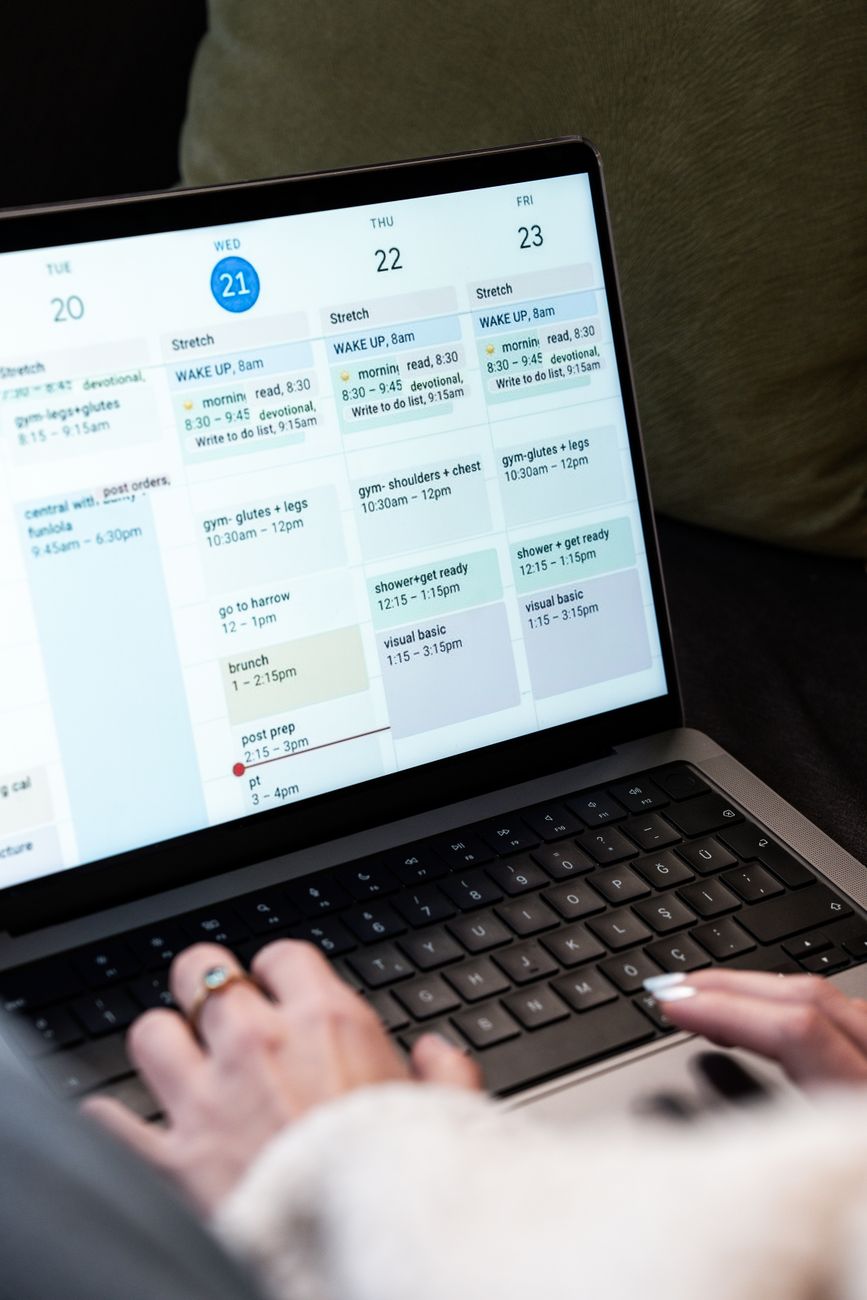
To understand the upgrade, you need to see the gap clearly. A traditional scheduler does three things: connect your accounts, let you write a post manually, and publish it at a time you pick. That is the entire feature set. You still do all the creative work — the research, the copy, the hashtags, the timing guesswork.
An AI social media scheduler layers intelligence on top of every one of those steps. Here is a side-by-side breakdown of where the difference shows up in practice:
- Content creation: Traditional tools have a blank text box. AI schedulers generate captions, hooks, and scripts from a prompt, a URL, or even an uploaded image.
- Timing: Traditional tools let you pick any time. AI schedulers analyze historical engagement data and platform-specific patterns to recommend optimal publish windows.
- Multi-platform adaptation: Traditional tools copy the same post to every platform. AI schedulers rewrite the same idea in the right format — short and punchy for X (Twitter), keyword-rich for YouTube, story-driven for TikTok.
- Performance feedback: Traditional tools show basic analytics. AI schedulers surface actionable insights — which hook style drove saves, which posting time lifted reach by 40%.
- Repurposing: Traditional tools do not repurpose at all. AI schedulers can turn a blog post into five platform-native pieces of content in under two minutes.
The practical implication: a solo creator using a traditional scheduler still spends 8-12 hours per week on content production. A creator using an AI scheduler can compress that to 2-3 hours, because the tool handles the first draft, the formatting, and the scheduling logic.
How AI Schedulers Actually Work: The Tech Behind the Automation
Most AI schedulers are built on large language models (LLMs) — the same class of models that powers ChatGPT — fine-tuned or prompted specifically for social media content patterns. When you input a topic or a URL, the model draws on training data from millions of high-performing posts to generate copy that follows proven engagement structures: strong hook, clear value, specific call to action.
Timing recommendations come from a different layer: predictive analytics. The tool looks at your account's historical data (or, for new accounts, platform-wide benchmarks) and identifies windows where your audience is most active and least saturated by competitor posts. This is not guesswork — it is pattern recognition applied to real engagement signals like impressions, saves, and click-through rates.
Platform-specific formatting is handled by what engineers call output constraints. The model knows that a LinkedIn post performs best at 150-300 words with a line-break-heavy format, that an Instagram caption needs hashtags clustered at the end, and that a TikTok script needs a pattern-interrupt in the first three seconds. These rules are baked into the generation pipeline, so you get platform-ready copy, not a generic block of text you have to reformat yourself.
Finally, multi-platform planning uses a content graph — a structured map of your content pillars, posting frequency, and audience segments — to prevent repetition and ensure variety. Instead of posting the same promotional message five days in a row, the scheduler distributes content types: educational on Monday, behind-the-scenes on Wednesday, promotional on Friday.
The Role of Engagement Data in Smarter Scheduling
Raw scheduling is table stakes. What separates good AI schedulers from great ones is how they use engagement feedback to improve future recommendations. Every post you publish generates a signal: how many people saw it, how many engaged, how long they watched, and what they did next.
A well-built AI scheduler ingests those signals and updates its timing and content recommendations accordingly. If your Tuesday 7 PM posts consistently outperform your Thursday 12 PM posts, the system learns that and shifts your default schedule. If educational carousel posts generate 3x more saves than single-image promotional posts, the system flags that pattern and suggests you create more carousels.
This feedback loop is what makes AI scheduling genuinely smarter over time — not just faster. According to Sprout Social's research, brands that post at data-recommended times see up to 30% higher engagement rates than those posting at arbitrary times. That gap compounds quickly when you are publishing 20+ pieces of content per month.
Specific Workflows an AI Scheduler Can Automate for Solo Creators
Theory is useful; specifics are actionable. Here are the concrete workflows where an AI social media scheduler saves the most time for individual creators and small teams.
1. Caption and Hook Generation
Writing captions is the single biggest time sink for most creators — not because it is hard, but because staring at a blank box for every post adds up fast. An AI scheduler eliminates the blank box. You give it a topic, a tone, and a platform, and it generates multiple caption options with hooks already built in.
Tools like Postigniter's Post Hook Generator are built specifically for this: they surface high-converting opening lines that stop the scroll, based on what has worked across thousands of posts in your niche. You pick the hook you like, refine it in 30 seconds, and move on.
2. Optimal Timing Recommendations
Posting at the wrong time is one of the most common — and most invisible — mistakes creators make. A great post published at 2 AM on a Sunday reaches almost nobody. AI schedulers remove that variable entirely by recommending publish windows based on real audience activity data.
Postigniter publishes platform-specific timing guides built on aggregated engagement data. For example, the best time to post on Instagram varies significantly by day, audience timezone, and content type. An AI scheduler cross-references all three to give you a specific, defensible recommendation — not a vague "post in the morning" suggestion.
3. Multi-Platform Content Adaptation
One idea should not require five separate writing sessions. An AI scheduler takes a single piece of content — say, a blog post or a YouTube video — and adapts it for every platform you manage. The core message stays consistent; the format, length, and tone shift to match each platform's norms.
This is where content repurposing tools become essential. Postigniter's Content Repurposer handles exactly this workflow: paste in your source content, select your target platforms, and get platform-native versions ready to schedule. A 1,500-word blog post becomes a LinkedIn article summary, three Instagram carousel slides, a TikTok script, and an X thread — in minutes, not hours.
4. Hashtag and Keyword Optimization
Hashtags are not dead — they are just misunderstood. The mistake most creators make is using the same 30 hashtags on every post, which signals spam to platform algorithms. AI schedulers generate context-specific hashtag sets based on the post's actual content, your niche, and current search volume trends.
Similarly, keyword-rich captions matter enormously for discoverability on platforms like YouTube and LinkedIn. Postigniter's Keyword Caption Generator builds captions around terms your target audience is actively searching — bridging the gap between social media and SEO in a way manual writing rarely does consistently.
5. Performance Tracking and Content Scoring
Knowing that a post "did well" is not actionable. Knowing that your hook style drove a 4.2% engagement rate — versus your account average of 2.1% — is. AI schedulers with built-in analytics go beyond vanity metrics to surface the specific variables that drove performance.
Use an Engagement Rate Calculator to benchmark your posts against industry standards and identify which content types are actually moving the needle. Without this feedback, you are optimizing blind.

Where AI Schedulers Still Fall Short — and What to Do About It
No tool is perfect, and AI schedulers are no exception. The most common failure points are worth knowing before you commit to a workflow.
Brand voice drift is the biggest one. LLMs generate fluent, grammatically correct copy — but "fluent" is not the same as "on-brand." If your brand has a specific, idiosyncratic voice (dry humor, highly technical, deeply personal), the AI's first draft will often sound generic. The fix: build a detailed brand voice prompt that you paste into every generation request. Include examples of posts that nailed your tone and explicitly state what to avoid.
Trend blindness is another real limitation. AI models have training cutoffs, which means they do not know about a meme that went viral last Tuesday or a platform algorithm change that dropped reach for carousel posts this week. You still need a human in the loop to inject timely, trend-aware content. Think of the AI as your production engine and yourself as the editorial director.
Finally, over-scheduling is a trap that AI tools make easier to fall into. Because generating and scheduling content becomes fast, creators sometimes flood their feeds — posting five times a day on every platform and burning out their audiences. More content is not always better. According to Hootsuite's posting frequency research, quality and consistency beat volume on every major platform. Let the AI help you produce better content, not just more of it.
How to Choose the Right AI Social Media Scheduler for Your Needs
The market has exploded with options, which makes choosing harder. Here is a practical framework for evaluating any AI scheduler before you commit.
- Platform coverage: Does it support every platform you actually use? A tool that covers Instagram but not LinkedIn is only half a solution if LinkedIn is where your audience lives.
- Content generation quality: Run a test. Give it a topic you know well and see if the output sounds like something a human expert would write, or like a generic blog introduction. The gap between good and mediocre AI copy is obvious when you test with a topic you understand deeply.
- Timing intelligence: Does it use your account's actual data, or just generic platform-wide benchmarks? Account-specific data is always more accurate.
- Repurposing capability: Can it take one piece of content and adapt it for multiple platforms natively? This is the workflow that saves the most time for busy creators.
- Free tier availability: For solo creators especially, cost matters. Postigniter offers a full suite of free AI content tools — including caption generators, hook generators, and repurposing tools — with no credit card required. That is a meaningful advantage when you are testing workflows before scaling.
According to Statista, over 5 billion people use social media globally. The competition for attention is not slowing down. The creators who build efficient, AI-assisted content workflows now will have a compounding advantage over those who keep doing everything manually.
Getting Started: A Practical First Week With an AI Scheduler
The biggest mistake new users make is trying to automate everything on day one. Start narrow. Pick one platform and one content type — say, Instagram captions — and run your AI scheduler for that single workflow for a week. Measure your time saved and your engagement results before expanding.
By week two, add a second platform and experiment with the timing recommendations. By week three, start using the repurposing workflow to turn your best-performing post into content for two other platforms. This staged approach prevents overwhelm and gives you clean data on what the AI is actually improving.
Ready to see what an AI-powered workflow looks like in practice? Get started with Postigniter's free tools at postigniter.com — no setup fees, no credit card, and access to over a dozen AI content tools built specifically for social media creators. Discover how much time you can reclaim in your first week.
The shift from manual posting to AI-assisted scheduling is not about replacing your creativity. It is about removing the repetitive, time-consuming production work so your creativity can go further. The creators who understand that distinction — and act on it — are the ones building sustainable, growing audiences in 2025 and beyond.
Tags
Prince Sargbah
Content creator and social media strategist sharing tips to help you grow your online presence.