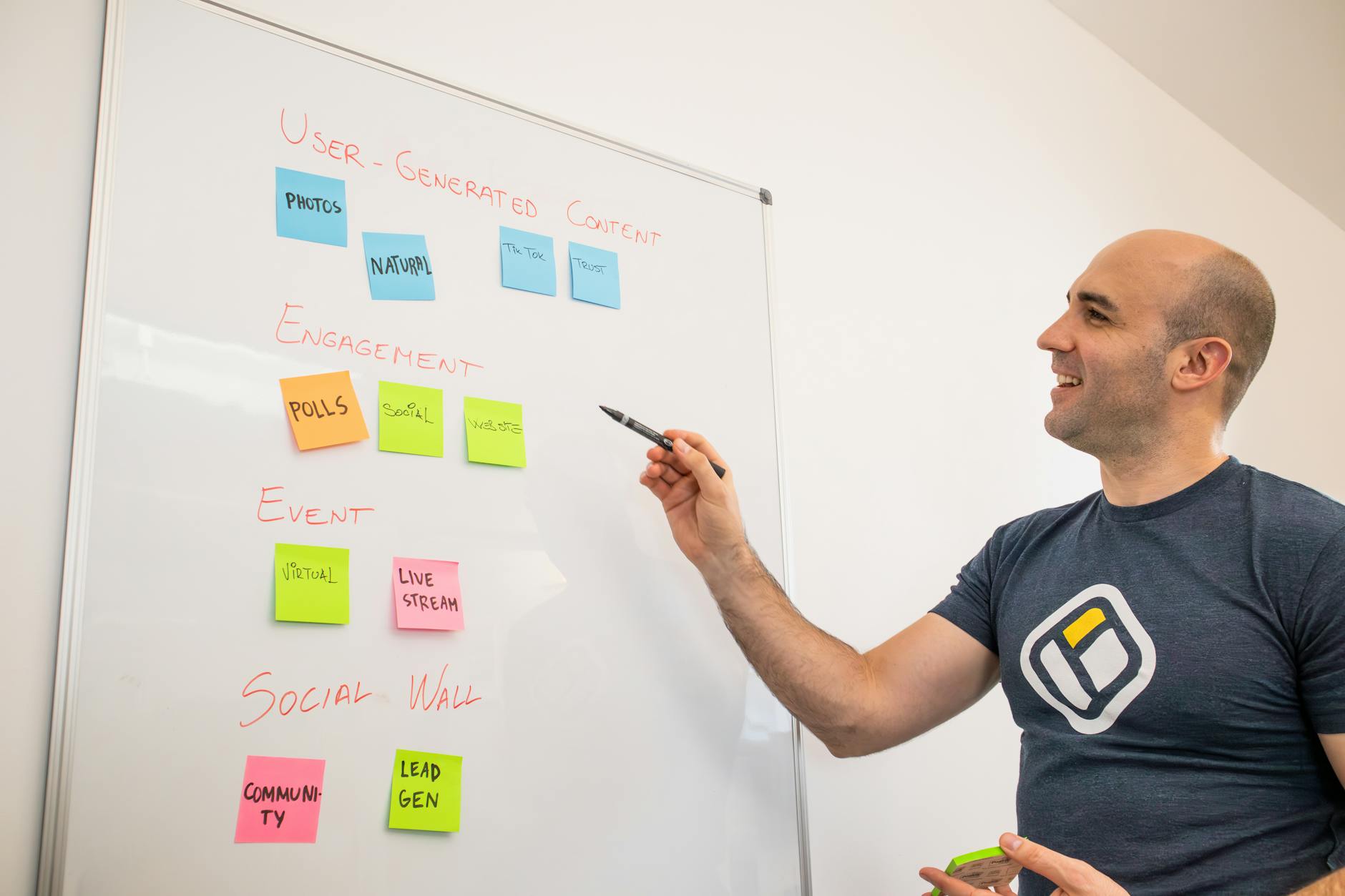
How the Growth of Social Media Is Rewriting Content Strategy in 2026
Postigniter Team
May 18, 2026
How the Growth of Social Media Is Rewriting Content Strategy in 2026
Social media no longer behaves like a simple broadcast channel. In 2026, it’s a search engine, a research lab, and an always-on recommendation system deciding what your audience sees next. If you’re still planning content the way you did even three years ago, you’re leaving reach, revenue, and relevance on the table.
This guide breaks down how the growth of social media is changing content strategy, what “good” looks like in 2026, and the practical steps you can take to adapt—whether you’re a solo creator, brand marketer, or someone who just graduated from Social Media Marketing All-in-One For Dummies to real-world execution.
From Broadcast to Discovery: What Is Content Strategy Now?
Before you can adapt, you need absolute clarity on a basic question: What is content strategy in the age of algorithmic feeds and social search?

Traditionally, people answered with a schedule: post X times per week on each platform. That’s not enough anymore. In 2026, a modern content strategy is a system that connects:
- Your business goals (revenue, leads, community, brand lift)
- Your audience’s intent and questions
- Platform behavior and algorithm signals
- Repeatable workflows and measurement loops
If you’ve ever Googled what is a content strategy or what is social media marketing, you’ve probably seen hundreds of definitions. The through-line in the latest research from Hootsuite, Sprout Social, and independent strategy shops is clear: your content strategy is not a calendar; it’s a system designed to earn attention, trust, and action over time.
How the Growth of Social Media Changed the Rules
The growth of social media hasn’t just added more platforms; it has fundamentally changed how people discover and evaluate content:
- Algorithms reward retention, not volume. TikTok, Instagram, YouTube, and LinkedIn prioritize watch time, saves, comments, and return visits over raw impressions.
- Feeds have become search engines. People now search in TikTok, Instagram, and YouTube before Google for product reviews, tutorials, and local recommendations.
- Trust beats reach. Creator partnerships are measured by impact and alignment, not just follower counts.
- AI raised the bar. With over 80% of marketers using AI in some part of their workflow, average content is easier to produce—and easier to ignore.
In other words, the social media growth curve has made it impossible to win by posting more. You win by being more relevant, more searchable, and more helpful than everyone else competing for the same seconds of attention.
Social Media and Marketing: Strategy in a Search-First World
One of the biggest shifts in social media and marketing is the rise of social SEO. Platforms like TikTok and Instagram are increasingly behaving like search engines:
- Instagram indexes captions and alt text for keywords.
- TikTok ranks videos based on keyword relevance in captions, on-screen text, and spoken audio.
- YouTube surfaces Shorts and long-form videos through topical clusters and keyword-rich metadata.
This means your content strategy must answer two questions simultaneously:
- Is this content worth finding (useful, entertaining, or emotionally resonant)?
- Is this content searchable (structured around words and phrases people actually use)?
For creators and marketers who grew up on engagement metrics, this is a mindset shift. Social is no longer just a place to spark conversation; it’s where people search, research, and compare options—sometimes in the same scroll where they’re looking up “Lidl near me” or “Walmart near me.” Your posts must be optimized for those discovery behaviors.
Core Principles of Modern Marketing on Social Media
If you’re rethinking your approach to marketing on social media in 2026, anchor your strategy around these principles:
1. Relevance Over Reach
Algorithms prioritize how your content performs with non-followers. That makes relevance king. Instead of trying to talk to everyone, focus on the narrowest possible clear audience:
- “Freelance designers building a portfolio” rather than “creatives”
- “Local foodies in Austin looking for late-night spots” rather than “people who like restaurants”
Use interviews, comments, DMs, and platform analytics to map their real questions and frustrations. Your content strategy should be a systematic plan to answer those questions in public.
2. Intent-Driven Content Pillars
High-performing teams organize content around intent, not just themes. Three reliable pillars:
- Discoverability: Short-form videos, hooks-first carousels, and search-driven captions designed to reach new people.
- Demand & consideration: Deep dives, comparison content, and tutorials that help people evaluate options.
- Retention & community: Behind-the-scenes posts, live Q&As, and collabs with other creators or customers.
Each pillar should have defined formats, distribution channels, and success metrics.
3. Platform-Native Creativity
“Post once, share everywhere” is dead. The same idea can travel across platforms, but the format, hook, and framing must match each network’s culture:
- TikTok Strategy: Pattern-interrupting hooks in the first 1–3 seconds, narrative-driven shorts, and fast pacing.
- Instagram Marketing: Reels for reach, carousels for depth, Stories for intimacy and DMs, and SEO-aware captions.
- YouTube Growth: Shorts to introduce you to new viewers, long-form videos and livestreams to build authority and watch time.
Designing a Future-Proof Social Media Content Strategy
With the strategic context in place, you can now design a practical system. Here’s a framework for building your plan from scratch or upgrading what you already have.
Step 1: Tie Social to Real Business Outcomes
Move beyond “get more engagement.” Start with SMART goals that tie directly to your business model:
- Creators: Grow paid memberships, sell digital products, or secure higher-value brand partnerships.
- Brands: Drive qualified leads, increase branded search, or reduce support volume via educational content.
Example goal: “Increase email subscribers by 25% in 90 days from Instagram by posting three educational Reels per week with a lead magnet CTA.”
Step 2: Map Your Audience’s Search & Discovery Behaviors
To align with the new reality of social search:
- Use platform search bars to see autocomplete suggestions around your niche.
- Analyze top-performing videos on TikTok and YouTube for recurring phrases in titles, captions, and comments.
- Pay attention to how your audience actually phrases questions in DMs and replies.
On YouTube specifically, a tool like the YouTube Keyword Generator can help you discover relevant topics and long-tail phrases that real viewers search for, then turn those insights into Shorts and long-form videos that are easier to rank.
Step 3: Build Content Pillars Around Intent
Translate your audience research into 3–5 content pillars. For example, a creator helping small businesses with social media might use:
- Quick Wins: 30-second Reels/TikToks with simple tactics to improve profiles or hooks.
- Deep Dives: YouTube tutorials on topics like “how to read your Instagram Insights.”
- Case Studies: Before/after content strategy breakdowns for clients or your own brand.
- Mindset & Behind the Scenes: Creator life, failures, testing new formats.
Each pillar should include a mix of short-form and long-form, plus formats for both discovery and nurturing.
Step 4: Engineer Hooks and Retention
With algorithms heavily weighted toward retention, you need to design each piece of content like a mini-story:
- Start with a hook: A bold claim, surprising stat, or ultra-specific problem.
- Deliver value fast: No 15-second intros; get to the payoff within 3–5 seconds.
- Stack micro-moments: Pattern interrupts, on-screen text, and scene changes to keep people watching.
On YouTube, your title and description play a huge role in click-through and watch behavior. Tools like the YouTube Title Generator and YouTube Description Generator can help you turn a strong idea into SEO-friendly, hook-driven metadata that aligns with how viewers search.
Step 5: Systematize Production, Repurposing, and Testing
To keep up with the pace of change without burning out, treat content as a pipeline:
- Ideation: Batch ideas weekly using audience questions, trend research, and analytics.
- Production: Block time to film multiple videos or draft multiple carousels in one session.
- Repurposing: Turn one deep-dive video into clips, Reels, TikToks, carousels, emails, and blog posts.
- Testing: A/B test hooks, thumbnails, and CTAs. Use analytics to double down on what works.
AI tools help you move faster here, but the key advantage isn’t automation—it’s iteration. The teams winning in 2026 are the ones who test more ideas, more often, with shorter feedback loops.
How Creators Should Adapt Content Strategy on Key Platforms
YouTube: From Single Videos to Topic Clusters
YouTube is still the backbone of many content businesses, but success increasingly comes from building topic clusters rather than chasing one-off viral hits:
- Plan 3–5 related videos around each core topic so the algorithm can understand your channel’s authority.
- Use Shorts as front-door content that introduces new viewers to your long-form library.
- Analyze which topics retain viewers best and expand those into series.
For deeper optimization, tools like YouTube Channel Analyzer and YouTube Video Analyzer can help you understand what’s working on your channel and how your videos perform on key metrics like average view duration and click-through rate.
Instagram: Searchable Captions and Community Signals
Instagram has shifted heavily toward discovery via Reels and search. To keep up:
- Write captions that naturally incorporate keywords your audience searches for (e.g., “what is content strategy for small businesses”).
- Use carousels to deliver depth and save-worthy value; these send strong retention and “conversation density” signals.
- Lean into DMs, comments, and Story replies as key indicators of real community, not just vanity engagement.
TikTok: Short-Form as the New Top of Funnel
TikTok remains a discovery machine. It’s often the first place people encounter a creator or brand, even if they later convert on Instagram, YouTube, or email:
- Use TikTok to test hooks and topics rapidly; migrate winning concepts to longer-form channels.
- Optimize for watch time and replays rather than profile visits alone.
- Pair organic content with smart keyword usage in captions to catch search traffic.
Try These Free Tools to Level Up Your Social Content Strategy
As social platforms evolve, the right tools can help you stay ahead without sacrificing quality.
- YouTube Keyword Generator – Discover high-intent keywords and topic ideas your audience is actively searching for on YouTube.
- YouTube Title Generator – Turn your ideas into SEO-optimized, click-worthy video titles tailored to your niche.
- Instagram Caption Generator – Craft on-brand, engagement-focused captions that integrate keywords naturally for better social SEO.
Putting It All Together: A New Playbook for the Growth of Social Media
The growth of social media has transformed content strategy from “post consistently and hope” into a sophisticated system that blends social SEO, retention optimization, and community-building. Feeds behave like search engines. Algorithms value time and trust. Average content is cheaper than ever to produce—and easier than ever to ignore.
To stand out, your strategy must be intentional and data-informed: tie content to business outcomes, build around audience intent, customize for each platform, and iterate relentlessly. Whether you’re managing a brand, building a creator business, or just moving beyond entry-level resources like Social Media Marketing All-in-One For Dummies, the opportunity is the same: create content that’s both searchable and worth finding. That’s how you turn social media from a time sink into a growth engine in 2026 and beyond.
Tags
Postigniter Team
The Postigniter team shares practical tips and strategies to help creators grow their online presence.