From Idea to Viral: The AI Workflow Every TikTok Creator Needs in 2025
Prince Sargbah
August 04, 2026
Why Most TikTok Creators Never Make It Past 500 Views
Every creator has experienced it: a great idea, a filmed video, and then — silence. The algorithm ignores it, and the views flatline at 312. The problem is rarely the idea itself. It's the structure. A viral content generator TikTok workflow fixes this by turning raw concepts into precisely timed, hook-first scripts that the algorithm actually rewards. This isn't about gaming TikTok — it's about speaking its language fluently.
Generic "TikTok ideas" posts tell you to "be authentic" or "post consistently." Tool landing pages show you a text box and a button. Neither teaches you the actual process — the prompt templates, the hook formulas, the timing logic — that separates a 200-view video from a 2-million-view one. That's exactly what this guide covers, step by step.

Step 1 — Validate the Idea Before You Script Anything
Skipping validation is the single most common mistake new creators make. You spend 45 minutes scripting a video about "5 morning routine hacks" only to discover that format is oversaturated and the keyword has zero trending momentum this week. Validation takes five minutes and saves hours.
Here's a concrete validation checklist before touching any AI tool:
- Search your topic on TikTok directly. Filter by "This week." If the top videos have under 50K views, the topic is either cold or too niche — both are fine, but you need to know which.
- Check the comment section of top videos. Comments like "I needed this" or "Part 2?" signal genuine audience hunger. That's your green light.
- Look at the creator's other videos. If this is their only viral video, the topic may have had a one-time spike. If it's a pattern, you've found a repeatable format.
- Use Google Trends to cross-reference. A topic trending on Google often spills into TikTok within 48–72 hours — that's your window.
Only after this validation should you open your AI tool. You're not asking AI to invent an idea; you're asking it to package a validated one into a high-performing script.
Step 2 — Build Your Hook Using Proven AI Prompt Templates
TikTok's own internal data, cited in TikTok's Business Insights, consistently shows that the first 1–3 seconds determine whether a viewer swipes away. That's your hook window. Miss it, and your retention curve collapses before the algorithm has enough data to push the video further.
There are four hook structures that reliably outperform on TikTok right now:
- The Bold Claim Hook: "I made $4,000 in 11 days selling digital products — here's the exact system."
- The Contradiction Hook: "Everyone tells you to post every day. That's why you're stuck."
- The Curiosity Gap Hook: "There's a TikTok setting most creators have never touched — and it's killing your reach."
- The Relatable Pain Hook: "You've spent three hours editing a video that gets 80 views. Here's why."
To generate these with AI, use this exact prompt template — copy it, fill in your topic, and run it:
"Write 5 TikTok video hooks for a video about [YOUR TOPIC]. Each hook must be under 15 words, start with tension or a bold claim, and make the viewer feel they'll miss something critical if they scroll. Format: one hook per line, no numbering."
That specificity is what separates a useful AI output from generic filler. Vague prompts produce vague hooks. The constraint of "under 15 words" forces the AI to cut padding — exactly what TikTok's format demands. You can generate hooks like this instantly using the Post Hook Generator on Postigniter, which is purpose-built for social-first hook writing.
Step 3 — Script the Full Video With Timing Built In
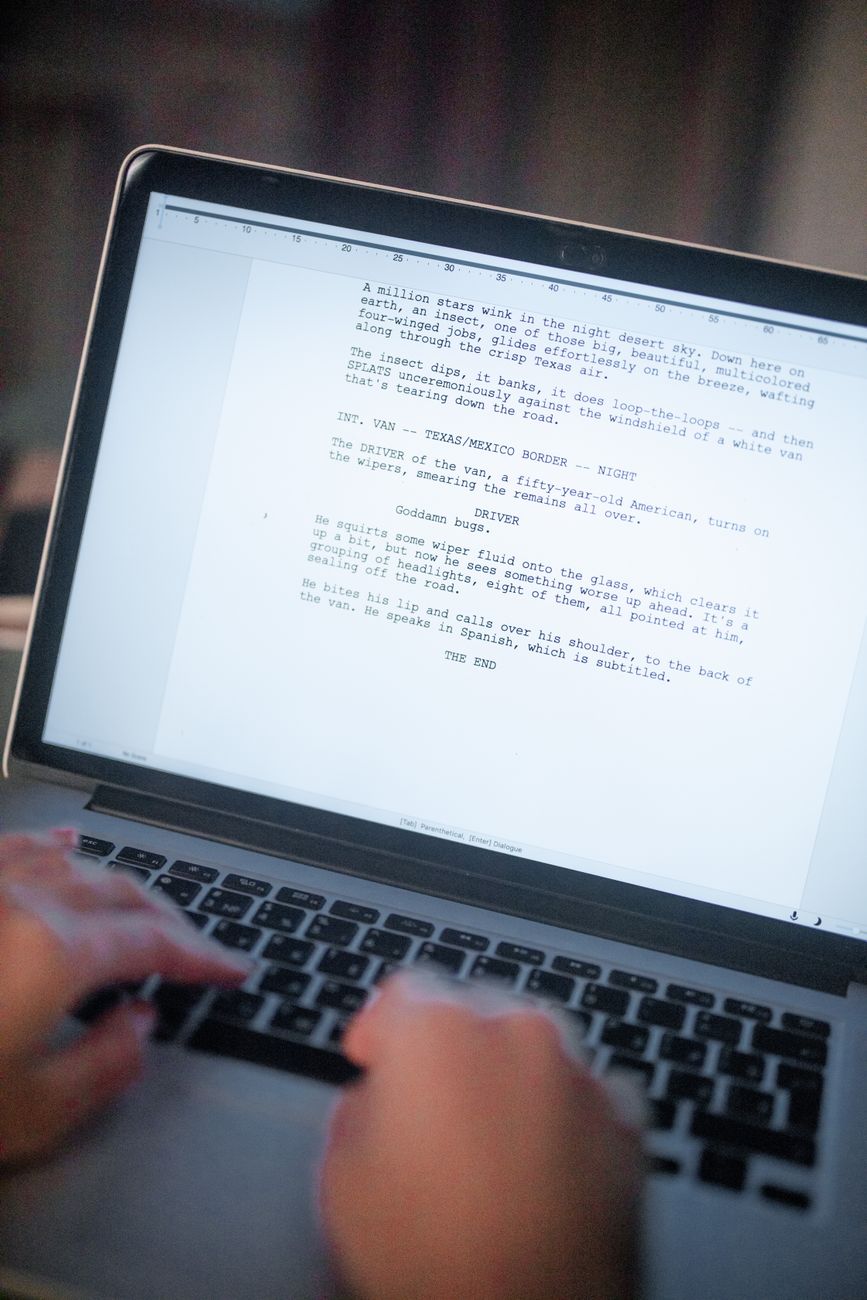
Most AI-generated scripts ignore timing entirely. That's a fatal flaw on TikTok, where pacing is structure. A 60-second TikTok has a specific rhythm: hook (0–3s), problem expansion (3–15s), solution or payoff (15–45s), and CTA (45–60s). Deviate from this, and even a great idea loses the audience.
Here's the full prompt template to generate a timed TikTok script:
"Write a 60-second TikTok script about [YOUR TOPIC] for a [YOUR NICHE] creator. Structure it as follows: Hook (0–3 seconds, under 15 words, bold claim or curiosity gap). Problem (3–15 seconds, 2–3 sentences expanding the pain point). Solution (15–45 seconds, 3–4 concrete steps or tips, each under 10 words as a spoken bullet). CTA (45–60 seconds, one clear action for the viewer to take). Use conversational language. No jargon. Write as if speaking directly to camera."
Let's say your topic is "how to grow on TikTok without dancing." Running that prompt through a capable AI tool produces something like this working example:
- Hook (0–3s): "You don't need to dance to go viral on TikTok."
- Problem (3–15s): "Most creators think TikTok is only for trends and choreography. So they never start — or they quit after three videos. Here's what they're missing."
- Solution (15–45s): "One: Pick one niche topic and own it. Two: Use text-on-screen to replace performance. Three: Post a 'talking head' video with a strong opinion. Four: Add captions — 80% of TikTok is watched on mute."
- CTA (45–60s): "Follow for the full 7-day no-dance TikTok growth plan."
That's a complete, timed, actionable script. No filler. No vague advice. The AI did the heavy lifting because the prompt gave it a precise brief.
Refining the Script: The Two-Pass Method
Never use the first AI draft as your final script. Run a two-pass refinement. On the first pass, check the hook against your four hook structures — does it create tension or a curiosity gap in under 15 words? If not, prompt the AI to rewrite only the hook with a stronger opening word (avoid "Are you," "Do you," or "Have you" — these are weak openers that signal low confidence).
On the second pass, read the script aloud and time it. AI tools often write scripts that run 10–15 seconds over target when spoken naturally. Cut any sentence that doesn't directly serve the hook's promise. If your hook is about a "TikTok setting most creators miss," every sentence in the body must connect back to that specific claim. Tangents kill retention.
Step 4 — Optimize for the Algorithm, Not Just the Viewer
Writing a great script is necessary but not sufficient. TikTok's algorithm scores videos on watch time, completion rate, shares, and saves — in roughly that order. Your script structure directly influences all four. A well-paced script with a strong CTA ("Save this for later") actively boosts the save metric, which TikTok weights heavily as a signal of long-term value.
According to Socialinsider's TikTok Benchmark Report, videos under 60 seconds have a median completion rate of 52%, compared to 38% for videos over 90 seconds. That's a 14-point gap — enormous when the algorithm is deciding whether to push your video to the next audience tier.
Three algorithmic optimizations to bake into your script:
- Pattern interrupts every 10–12 seconds. Change the camera angle, cut to text, or shift tone. This resets the viewer's attention and boosts watch time artificially — in the best way.
- Verbal callbacks to the hook. Reference your opening claim mid-video ("Remember that setting I mentioned?"). This rewards viewers who stayed and signals to the algorithm that your content has a coherent narrative arc.
- End on a loop. The last frame should visually or verbally connect back to the first. TikTok counts replays, and a looping video earns disproportionate watch-time credit.
Timing your post correctly is also part of the optimization layer. Use the TikTok Best Time to Post tool to find the optimal window for your specific audience — posting a great script at 3 AM when your audience is offline is a preventable mistake that wastes all the work above.
Step 5 — Scale the Workflow Across Formats and Platforms
Once you have a validated, timed, algorithm-optimized script, you have more than one video — you have a content asset. A single 60-second TikTok script can be repurposed into an Instagram Reel, a YouTube Short, a LinkedIn text post, and a Twitter/X thread with minimal additional effort. This is where AI workflows compound in value.
The repurposing prompt is simple: "Take this TikTok script and rewrite it as a [TARGET FORMAT] for [TARGET PLATFORM]. Adjust the tone for [PLATFORM AUDIENCE], keep the core argument identical, and change the CTA to match [PLATFORM BEHAVIOR]."
Postigniter's Content Repurposer tool automates this step, letting you push one script across multiple platforms without manually rewriting each version. For creators managing multiple channels, this alone can save three to four hours per week.
According to Sprout Social's 2024 Social Media Statistics, creators who post consistently across three or more platforms see 2.4x higher overall reach than single-platform creators. The bottleneck isn't ideas — it's production capacity. AI workflows solve exactly that problem.
Common Mistakes That Kill AI-Generated TikTok Scripts
Even with the right workflow, there are failure modes worth naming explicitly. Knowing them in advance is the difference between a creator who improves fast and one who blames the algorithm.
- Prompting for "viral" without constraints. Asking AI to "write a viral TikTok script" produces generic output every time. The word "viral" is meaningless to a language model. Instead, specify the hook structure, timing, niche, and audience pain point.
- Skipping the read-aloud test. AI writes for reading, not speaking. A sentence that looks clean on screen can be a tongue-twister at speed. Always read your script aloud before filming.
- Over-scripting the delivery. A word-for-word script often produces stiff, robotic delivery on camera. Use the script as a bullet-point guide after your first read-through. Know the structure; don't recite it.
- Ignoring the thumbnail frame. TikTok auto-selects a thumbnail from your video. If your first frame is a blurry transition or a mid-blink face, your click-through rate from the For You Page suffers. Script a strong visual opening — stand still, look at camera, deliver your hook.
- Not iterating on losing scripts. If a video underperforms, the workflow isn't broken — the hook or topic validation may have missed. Run the validation step again, change one variable (hook structure or topic angle), and test. Treat every video as a data point, not a verdict.
Putting It All Together: Your Repeatable TikTok AI Workflow
The full workflow, condensed into a repeatable system:
- Validate the idea — TikTok search, comment analysis, Google Trends cross-check (5 minutes).
- Generate hooks — Use the hook prompt template, pick the strongest from five options (10 minutes).
- Script the video — Use the timed script prompt, run the two-pass refinement, read aloud (15 minutes).
- Optimize for the algorithm — Add pattern interrupts, verbal callbacks, and a loop ending (5 minutes).
- Schedule at peak time — Use a data-backed posting window, not a guess (2 minutes).
- Repurpose — Push the script to other platforms with the repurposing prompt (10 minutes).
Total time from blank page to published, optimized, multi-platform content: under 50 minutes. Compare that to the average creator's three-hour production cycle of brainstorming, second-guessing, filming, and refilming. The workflow doesn't remove creativity — it removes the friction that blocks it.
Ready to run this workflow yourself? Explore Postigniter's free AI content tools — including the hook generator, content repurposer, and scheduling features — and go from idea to published in under an hour. Get started free today and join over 12,000 creators already using AI to build their audience faster.
Tags
Prince Sargbah
Content creator and social media strategist sharing tips to help you grow your online presence.